
Quitting a job is rarely easy, even when you are excited about what comes next. The way you resign shapes how people remember you, and those people may become references, clients or colleagues years from now. A well-written resignation email is short, polite and clear. You do not need to explain every reason you are leaving. You need to state your last day and offer to help with the handover. This resignation email example guide gives you templates you can copy, plus tips to leave on good terms.
Quick answer: Tell your manager in person first, then send a short, polite resignation email with your last working day. Two weeks’ notice is the usual courtesy, so state your date, offer to help with the handover and keep the tone positive.
This guide gives you a resignation email example you can copy, a version for tense situations, subject lines, tips on notice periods and a checklist of what to do before and after you send it.
Before you send a resignation email
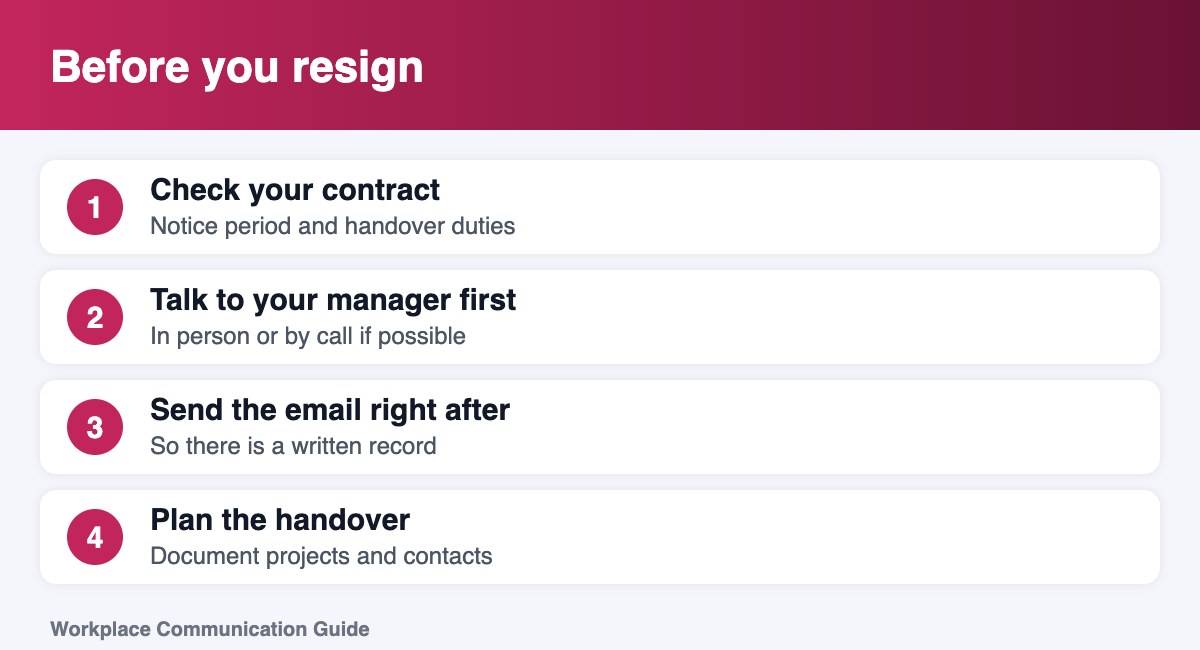
- Check your contract. Look for the notice period, any non-compete or confidentiality terms and rules on unused vacation.
- Tell your manager first. A short meeting or call is more respectful than an email arriving without warning.
- Send the email right after. It creates a written record of the date and terms.
- Make a handover plan. List your projects, contacts, passwords you must pass on and open tasks.
Simple resignation email example
This version works for most situations. Replace the names and dates.
Subject: Resignation: Jordan Lee
Hi Maria,
Please accept this email as formal notice of my resignation from my role as Marketing Coordinator. My last day will be Friday, January 10.
Thank you for the opportunities and support over the past two years. I have learned a lot, especially from our work on the spring campaign. I will do everything I can to make the transition smooth, including documenting my current projects and helping train a replacement.
Please let me know how I can help in the coming weeks.
Best regards,
Jordan Lee
Resignation email when you are leaving on difficult terms
If the relationship is strained, stay brief and neutral. Do not explain or argue.
Subject: Notice of resignation
Hi Maria,
I am writing to resign from my position, effective January 10. I will complete my current projects and prepare handover notes before then.
Thank you,
Jordan Lee
Resignation email with a shorter notice period
If you must leave sooner than the standard notice, explain once and offer a solution.
Hi Maria,
I am resigning from my role as Marketing Coordinator. Because of the timing of my new position, my last day will be December 27. I am sorry the notice is shorter than usual. I will prepare detailed handover notes this week and am happy to train a colleague before I leave.
Thank you for your understanding,
Jordan
What to include in a resignation email
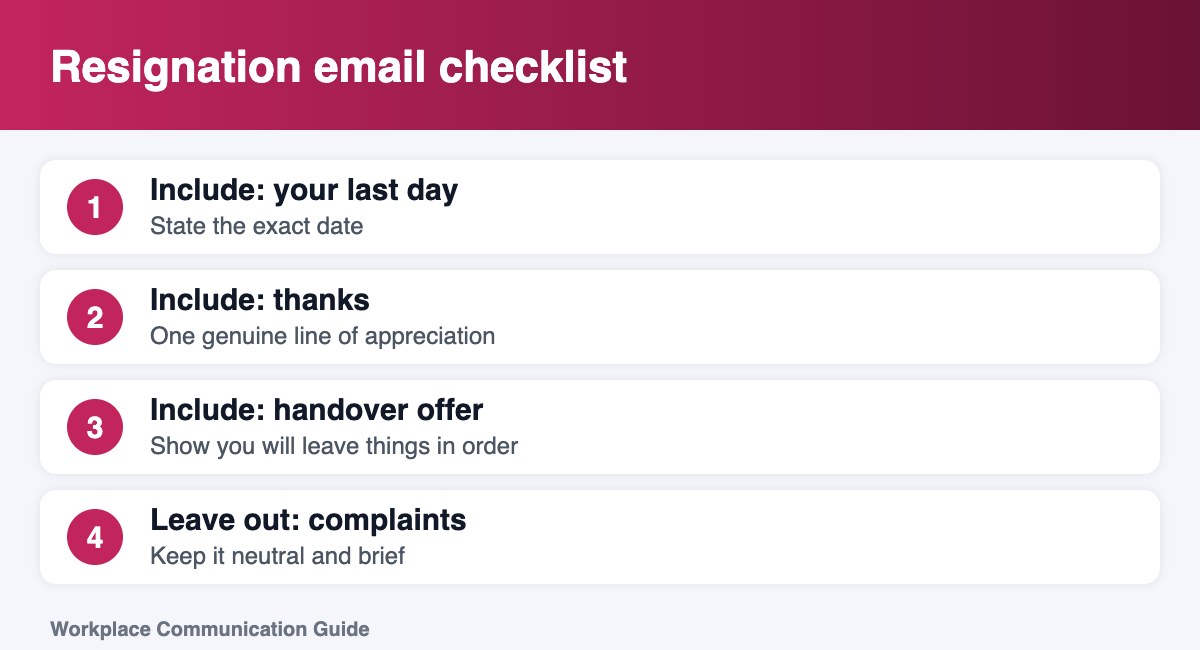
- A clear statement: “I am resigning from my position as…”
- Your last day: use an exact date.
- A thank-you: one honest sentence of appreciation.
- An offer to help: “I will document my projects and help with the transition.”
- A professional close: “Best regards,” and your name.
What to leave out
- Complaints about colleagues or the company. You do not know who will read it later.
- Details about your new job unless you want to share them.
- Anger or sarcasm. Even if it feels good, it rarely helps your future.
- Long explanations. A resignation is a notice, not a negotiation.
Resignation email subject lines
- Resignation: Jordan Lee
- Notice of resignation
- Resignation letter: Marketing Coordinator
- Resignation and handover plan
- Notice of resignation, effective January 10
Need more options? See our list of resignation email subject lines.
How much notice should you give?
In the US, two weeks is the common standard, though many employment relationships are at will and your contract or company policy may require more. Senior roles often use four weeks. If you are unsure, ask HR or check your employee handbook. Giving at least the required notice protects your reputation and your reference.
Who to tell and in what order
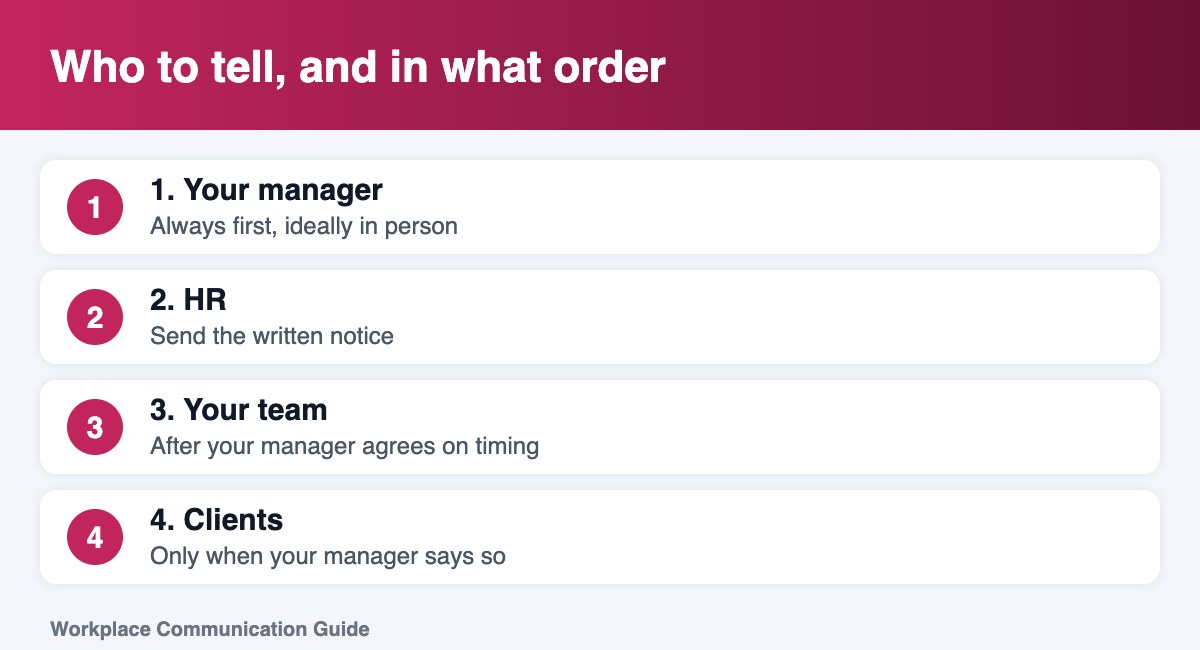
Tell your manager first, then HR, then your team once the timing is agreed. Do not tell clients or external contacts until your manager tells you how to handle it.
Your last two weeks: a checklist
- Write a handover document with open tasks, deadlines and key contacts.
- Update your calendar and set an out-of-office message.
- Return equipment and files, and delete personal data from company devices according to policy.
- Say goodbye to colleagues and exchange personal contact details if appropriate.
- Ask your manager or a trusted colleague for a reference or LinkedIn recommendation. See how to ask for a reference.
- Finish strongly. People remember the last weeks.
Counteroffers: should you accept?
Employers sometimes make a counteroffer. Before saying yes, ask yourself why you wanted to leave. If the reasons were about pay alone, a raise might help. If they were about growth, culture or your manager, one raise rarely fixes those problems. Many people who accept counteroffers leave within a year anyway.
Quick guide: notice by situation
| Situation | Typical notice | Tip |
|---|---|---|
| Standard full-time role | Two weeks | Offer a handover plan |
| Senior or management role | Four weeks or more | Check your contract first |
| Contract or notice clause | As the contract says | Read the exact wording |
| Immediate departure | None | Explain briefly and stay professional |
Expert tips for a smooth exit
- Read your contract before you send anything. Notice terms and final pay rules can differ.
- Keep the email factual. Avoid complaints, blame or comparisons.
- Say thank you. Name one thing you learned or enjoyed.
- Save your own copies. Keep performance reviews and contacts before your access ends.
- Protect the relationship. Colleagues and managers become future references.
Final paycheck rules vary by state, and the U.S. Department of Labor explains them on its page about the last paycheck.
Frequently asked questions
Is it okay to resign by email?
Yes, but only after speaking with your manager when possible. The email is the formal record.
Should I give a reason for leaving?
No. You can say “I have accepted another opportunity” or just thank them. You are not required to explain.
Can I resign without notice?
You can in many at-will jobs, but it may damage your reputation and eligibility for rehire. Review your contract and consider the long-term effect.
What should I do if my manager reacts badly?
Stay calm and professional, repeat your last day, and involve HR if needed.
Should I send the resignation email to HR as well?
Many companies ask you to copy HR. Check the employee handbook or ask your manager.
Related guides
Planning your next move? Read how to ask for more money after a job offer and how to write a thank-you email after an interview. If you are weighing a promotion first, see how to ask for a promotion.
Quick recap: tell your manager first, send a short, polite email with your last day, offer help with the handover and keep the tone positive. Leave well, and the door stays open.
Resignation email example: a quick checklist
Use this resignation email example as a guide, but check each detail first. To begin with, confirm your last day with your contract. Then, decide what you want to say about the transition. Finally, keep the tone positive.
- State your last day clearly, for example “my last day will be Friday, January 10.”
- In addition, thank your manager in one sentence.
- Also, offer to help with the handover.
- However, leave out complaints and long explanations.
In short, a strong resignation email example is brief, polite and specific. As a result, you protect your reputation and keep the door open for future references.
